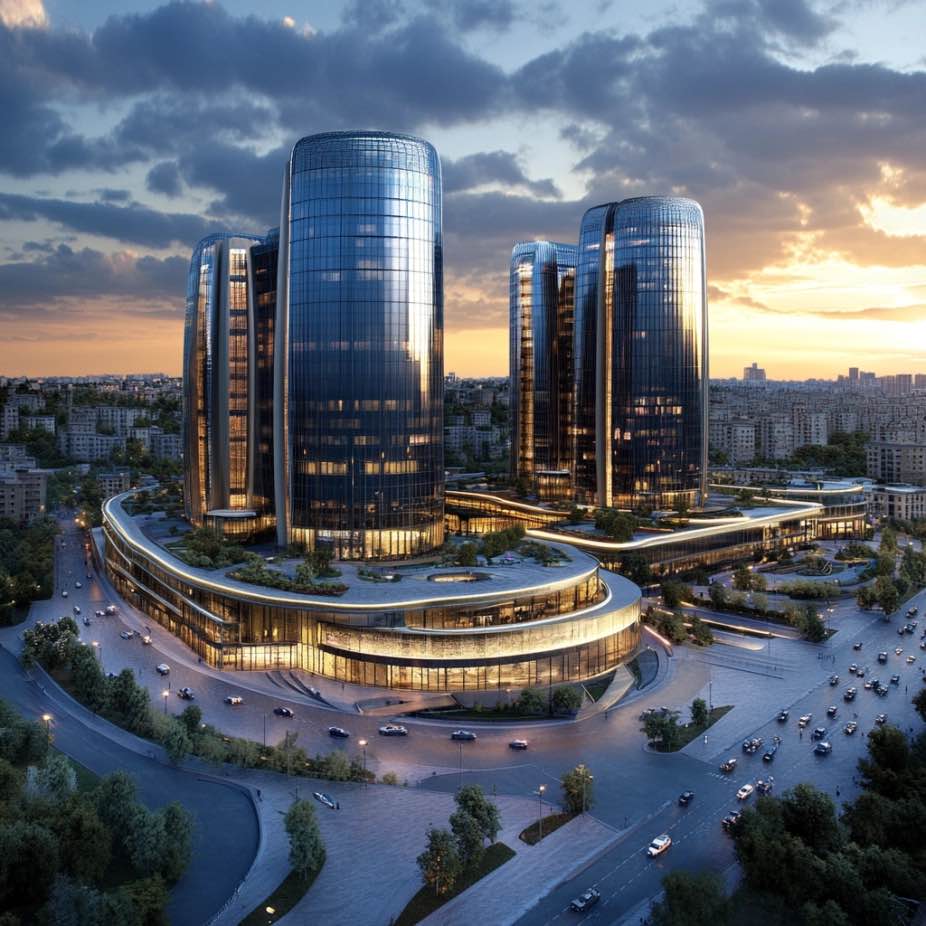
When designing modern buildings, it is essential to follow current standards for environmental performance and efficient resource use, because climate change is drawing the attention of society, development institutions, and countries to issues related to climate risks.
Green certification systems help designers and building owners create healthier and more favorable environments for living and working. Obtaining certification becomes a tool that increases the investment attractiveness of real estate that takes climate risks into account during property construction and operation.
Residential, industrial, and office buildings are the most common subjects of environmental certification. However, entertainment, sports, and educational infrastructure facilities also seek greater energy efficiency and environmental performance. This article examines examples of projects that have been certified or are undergoing green certification.
Fitness centers
Source: https://rsggroup.com/
In addition to reducing their adverse environmental impact, fitness centers pursuing green certification develop and create more advanced conditions for visitor comfort. Particular attention is paid to natural lighting, improved indoor-air quality, and thermal comfort.
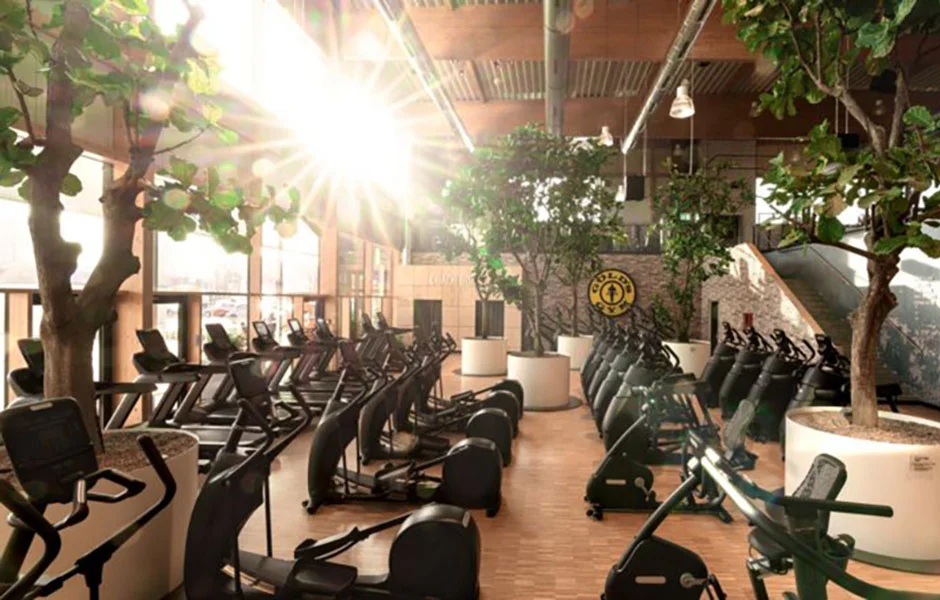
For example, Gold’s Gym in Berlin is a fitness center with unique environmental solutions and LEED Platinum certification.
The modern sports complex in Berlin was designed according to the principle of carbon neutrality. It uses environmentally friendly and recycled construction materials, and live plants and even trees are located inside the gym. The “Green Power” zone has spin bikes that generate clean energy. This means people can reduce their carbon footprint while exercising. A tool may emerge in the near future to issue carbon units to people who exercise actively. The more intense the workout, the more energy is generated and, consequently, the more carbon units will be issued. This approach requires no additional energy, will reduce carbon emissions, and will also create a community of active people interested in improving environmental conditions.
Exhibition centers
Source: https://www.horizont.net/
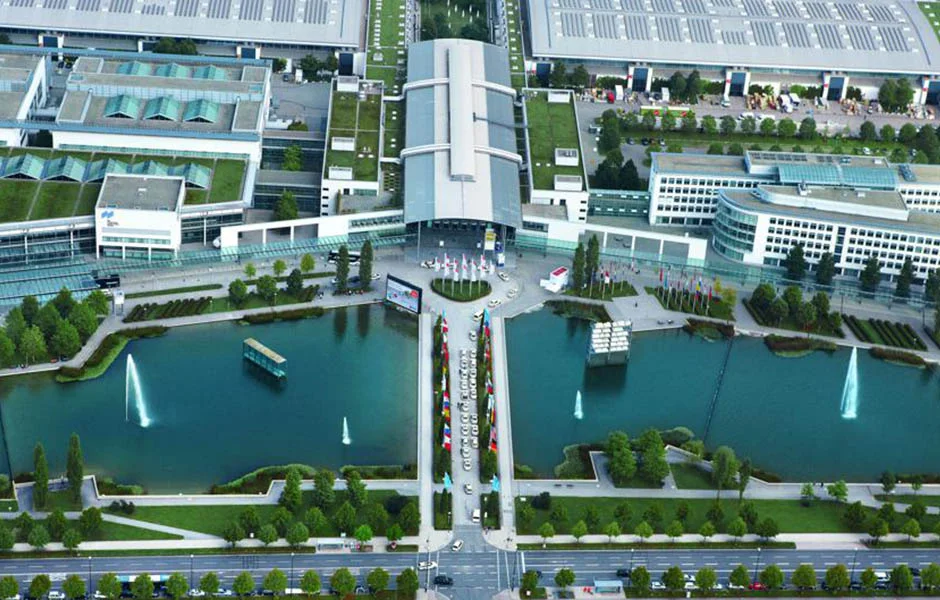
Modern exhibition centers use energy-efficient solutions and seek environmental certification to reduce operating costs and maintain a “green” image. Messe München in Germany is an example of an environmentally responsible exhibition center certified LEED Gold. The building uses innovative technologies to manage energy consumption and minimize waste. All energy consumed is green, with both solar and geothermal generation provided. The body of water in front of the exhibition center serves as a reservoir for collecting rainwater. Thanks to excellent transport accessibility, visitors can easily reach the center without using private vehicles, substantially reducing fossil-fuel consumption and greenhouse gas emissions. Messe München is not resting on its achievements and has set itself the ambitious goal of achieving carbon neutrality by 2030.
Retail space
Source: https://www.usgbc.org/
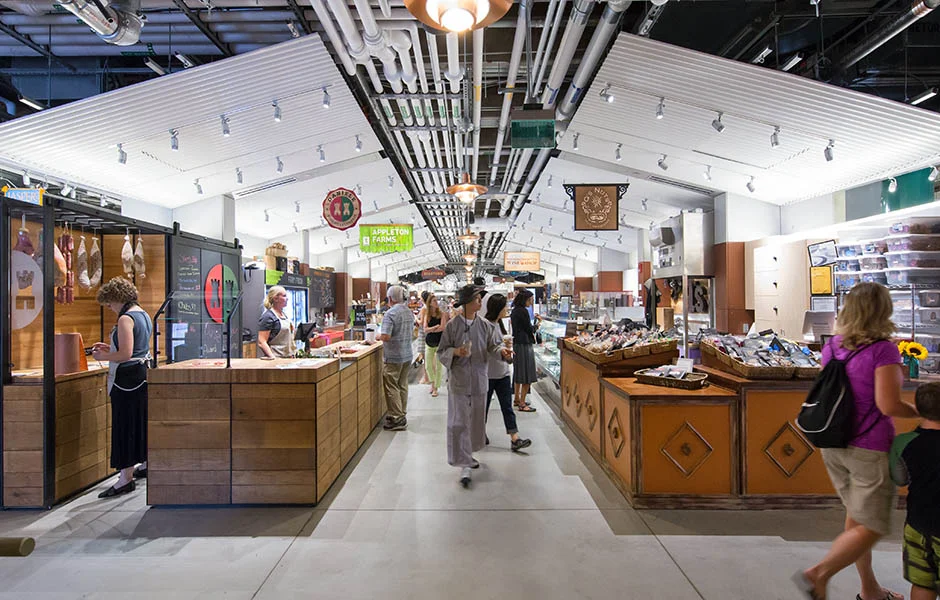
Large shopping centers often seek environmental certification. Against this backdrop, the Boston Public Market in the United States, certified LEED Silver, is an unusual project. It is a unique example of sustainable development. Everything sold at the market is produced in New England, with the vast majority from Massachusetts. The project thus supports the local economy and reduces carbon emissions associated with transporting food. All goods offered at the market are fresh and high-quality, helping city residents develop healthy lifestyles. The Boston Public Market also actively participates in educational initiatives intended to raise awareness of the importance of sustainable consumption and supporting the local economy. It has become not only a place to shop, but also a community center where people can exchange experience and knowledge about healthy eating and the environment.
Educational institutions
Source: https://www.tmk-group.ru
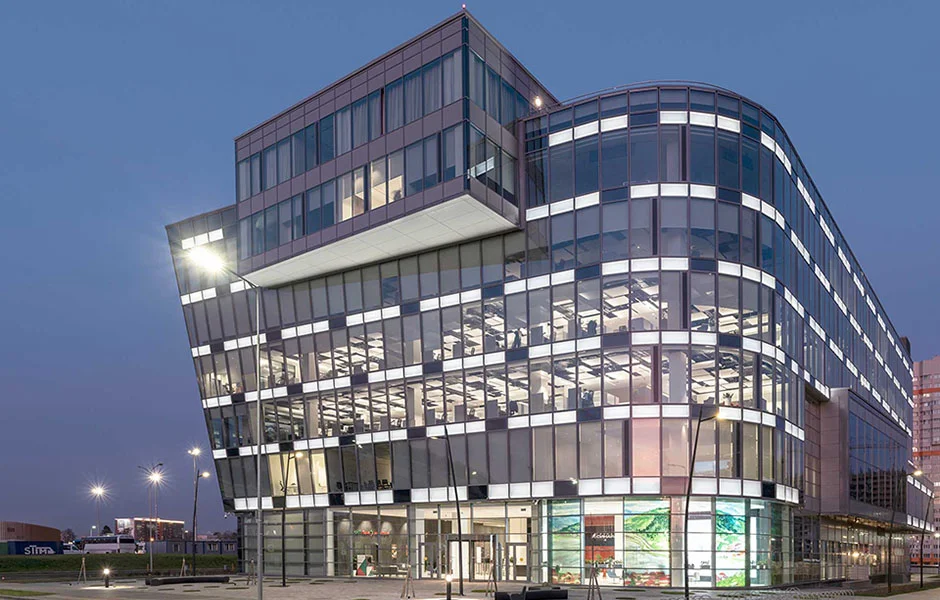
Green certification of schools, universities, and other educational buildings plays an important role in developing environmental awareness among young people. The TMK Research and Development Center in Skolkovo, Russia, is LEED Gold certified. The Center trains qualified personnel for the Pipe Metallurgical Company and conducts digital modeling, research, and development of innovative high-strength materials. The project was certified with consulting support from HPBS experts. Solutions to improve efficiency were incorporated into the Center’s design: optimization of architectural solutions, automated lighting control, and an energy-metering system. A modern ventilation system monitors indoor-air parameters. The use of energy-efficient technologies and environmentally friendly materials helps create a healthy educational environment.
Cultural facilities
Source: https://t.me/acdfuz/1314
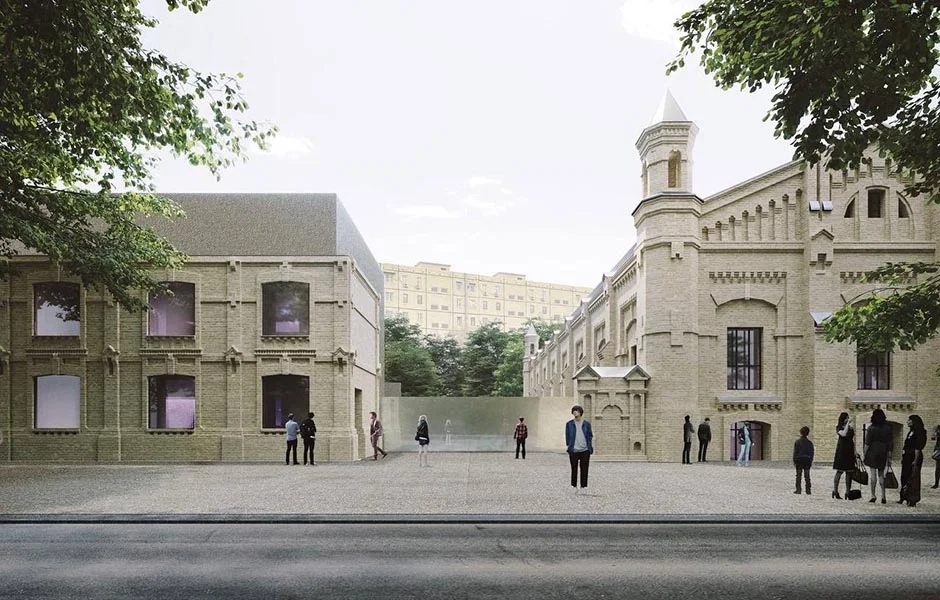
Museums and theaters can also be sustainable. The Center for Contemporary Art in Tashkent is pursuing LEED certification with a target rating of Gold. The museum is located in the historic part of the city, on the grounds of Uzbekistan’s largest national park. The building will house exhibition halls, a cafe, a restaurant, a library, VIP areas, conference rooms, and shared multifunctional spaces. The HPBS team is working on the project’s certification. The certification strategy includes the use of environmentally friendly materials and measures to improve resource-use efficiency. Applying green-building principles to the design of cultural facilities not only improves conditions for visitors, but also emphasizes the importance of developing a culture of sustainable development in society.
Business centers
Source: https://trillianttashkent.uz/ru/sustainability
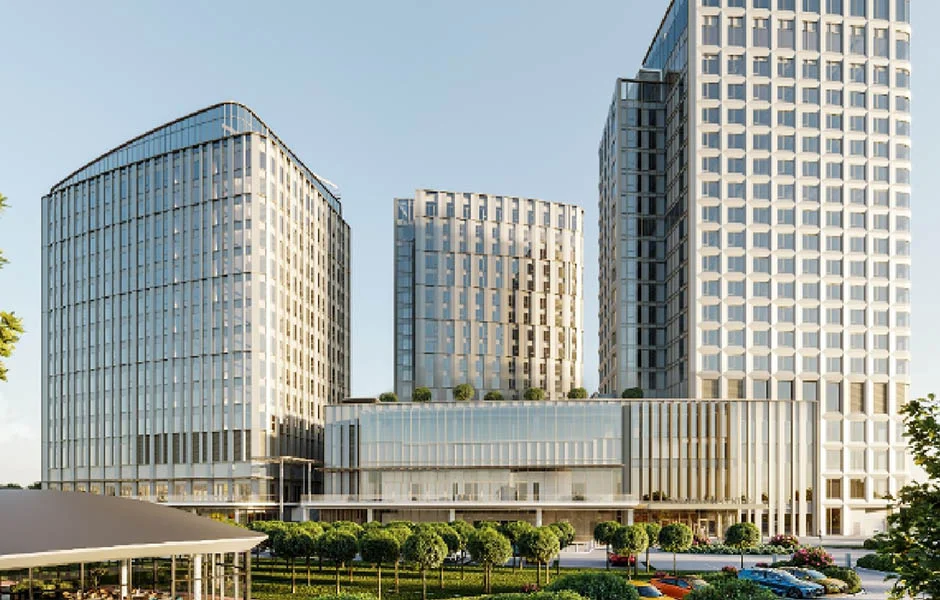
Sustainable development is also reflected in business-center design. The Trilliant business park, under construction in one of Tashkent’s busiest districts, is pursuing LEED certification with a target rating of Gold. In addition to office space, the project includes a five-star hotel, a convention center, retail pavilions, and sports and recreation areas.
When Trilliant was designed, particular attention was paid to using energy-efficient technologies and creating comfortable conditions for the building’s visitors and employees. The project provides for efficient use of natural light and introduces automated ventilation-control systems, making it possible to optimize resource consumption and maintain high indoor-air-quality standards. Waste collection and recycling solutions have been developed. This modern complex provides comfortable working conditions and helps promote environmental responsibility among tenants and employees.
Green building certification is becoming an important part of the architecture and construction of the future. It contributes to creating a healthier and more sustainable environment for living and working. Green-certified properties demonstrate how functionality and environmental performance can be combined. When selecting solutions for new projects, it is important to focus on sustainable technologies. Introduce environmentally responsible solutions into your projects.
If you need help certifying your project or would like to learn more about the benefits of green building, contact us.
-
Telephone: +99890 9306566
-
Email: info@hpbs.uz
Additional information
-
International green certification
Article author: Anastasia Andyuseva, HPBS Engineer