
The document will download when the window opens.
Development of Climate Projects
Climate projects are projects that reduce greenhouse gas emissions or increase their absorption. Examples include the use of renewable energy sources, improved energy efficiency in production, restoration of forest ecosystems, waste disposal projects, and so on.
As a result of implementing a climate project, a company can issue carbon units / carbon credits (carbon credits), which confirm that the company has reduced greenhouse gas emissions by a certain amount measured in metric tons of CO2e.
Companies that issue carbon credits may sell them
or use them for their own purposes, for example, to reduce their own carbon footprint
HPBS will help you thoroughly develop and implement a climate project and issue carbon credits
We have extensive experience in carbon regulation, base our work on international practices and standards, and provide an individual approach to our clients. As part of climate project implementation, we provide the following services:
-
Analysis of the Company’s activities to assess the feasibility of a climate project: HPBS experts will analyze the company’s current situation and identify potential for reducing greenhouse gas emissions or increasing their absorption;
-
Preparation of a climate project implementation methodology: after analyzing global practices and gaining an in-depth understanding of the Client’s business, we will propose the climate project methodology best suited to your organization and industry;
-
Calculation of greenhouse gas emission reductions: our experts will calculate greenhouse gas emissions before and after the climate project and quantify plans for issuing carbon credits;
-
Preparation of documentation supporting climate project implementation: experts will document the project in accordance with the requirements applicable to climate projects under the adopted methodology. Greenhouse gas emission reduction scenarios, climate project implementation timelines, and the carbon credit generation period will be presented. In addition, approaches to validation and monitoring of the climate project and verification of issued carbon credits will be developed;
-
Expert support for the implementation of measures under the climate project and the process of entering information about the climate project in the relevant registries
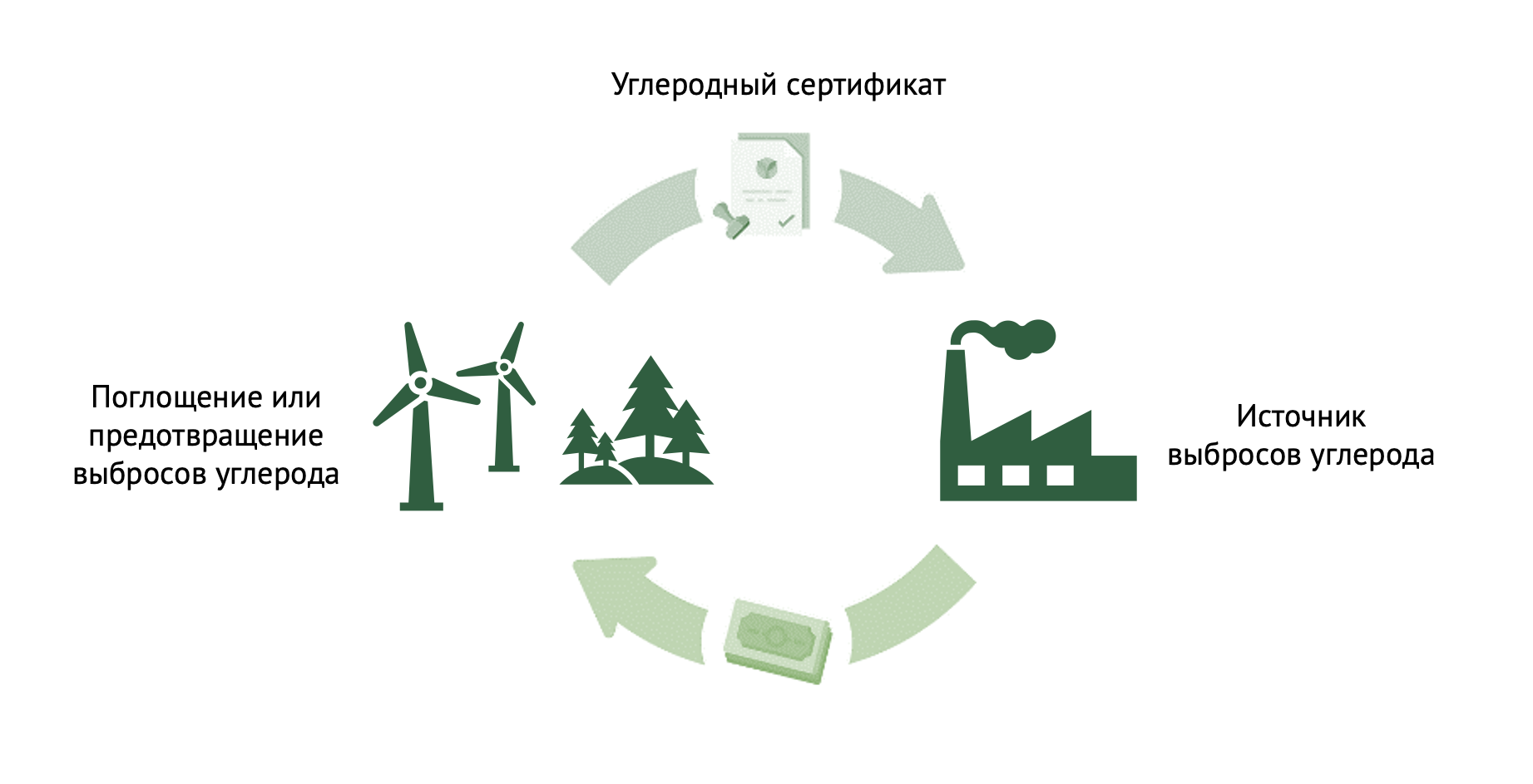
Climate projects are part of voluntary carbon markets. The main purpose of the carbon market is to stimulate greenhouse gas emission reductions. This is achieved by creating economic incentives for reducing carbon footprints and developing environmentally friendly technologies. Companies that demonstrate their contribution to emission reductions issue carbon credits and can earn income from selling them and recover the costs of implementing climate projects. Organizations that purchase carbon credits seek to reduce their carbon footprint with them, thereby improving their image and supporting sustainable development.
Climate projects are implemented under various international and national methodologies. Expert organizations develop climate project methodologies and facilitate the operation of voluntary carbon markets. The most widespread systems are CDP, VERRA, and Gold Standard.
Requirements for carbon footprint offsetting and carbon credit transactions are also beginning to take shape in the Republic of Uzbekistan. Thus, on March 7, 2024, the Cabinet of Ministers of the Republic of Uzbekistan issued Resolution No. 117 on the temporary regulations for projects involving greenhouse gas trading.
Additional information:
Get a consultation and proposal right now
We’re here to help

Anna Zavaleeva
CEO, HPBS Central Asia
Get a consultation and proposal right now
We’re here to help
Anna Zavaleeva
CEO, HPBS Central Asia