The document will download when the window opens.
Green Mahalla
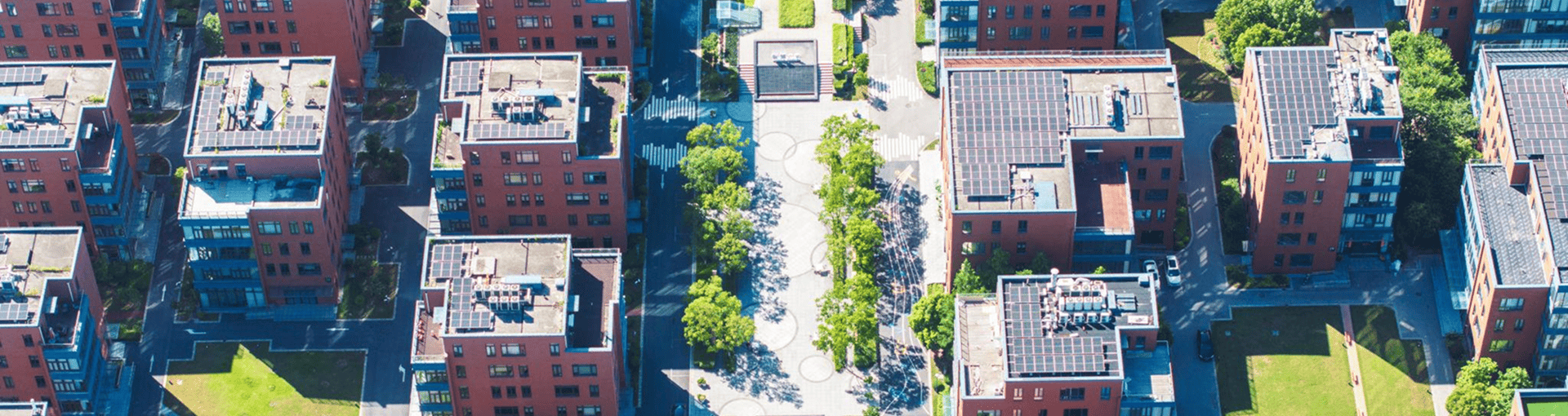
A mahalla in Uzbekistan is more than an administrative unit. It is a living system in which social ties, infrastructure, people’s daily lives and the economy intersect. Today, mahallas face the task of evolving into sustainable, energy-efficient and healthy spaces.
A Green Mahalla is a model for transforming a territory in which technology, nature and finance work as a single system.
To transform a mahalla from its current state into a sustainable system, the following is required:
1. Diagnosis of the mahalla’s current state:
-
Assessment of the territory’s stage of evolution according to Spiral Urbanism: resident surveys, assessment of the territory’s condition and its potential for evolution and scaling, social scenarios for using the space, and assessment of the social climate.
-
Infrastructure assessment: current energy consumption of buildings; condition of engineering systems; microclimate and air quality; water balance and drainage.
2. Development of a roadmap for the territory’s transition to a new stage of evolution and for the modernisation of systems to support future development, where every solution has a measurable effect, a financial model and a source of financing.
3. Attraction of financing for the territory’s modernisation and engagement with the authorities. Development of a financial model for the territory’s appeal.
Implementation of the solution roadmap and verification of the effectiveness of the mahalla space modernisation model.
Engineering foundation: the basis of a sustainable mahalla
Transformation is impossible without modernising engineering infrastructure.
Key solutions:
-
Energy-efficient renovation of buildings
insulation, window upgrades and reduced heat loss; -
Renewable energy sources (RES)
solar panels for private homes and public buildings; -
Heat pumps
transition from inefficient heating systems to modern low-energy solutions; -
Smart energy metering and management systems
digitalisation of consumption and cost reduction;
Result:
lower utility costs
reduced CO₂ emissions
increased property value
Nature as infrastructure: NBS solutions
Nature-Based Solutions (NBS) are not landscaping for aesthetic purposes, but engineering through nature.
The following are introduced as part of a Green Mahalla:
-
natural cooling systems through greenery and shade;
-
rain gardens and bio-drainage for water management;
-
local green spaces and community gardens;
-
reduction of the urban heat island effect.
Result:
improved microclimate
reduced load on stormwater infrastructure
greater psychological comfort for residents
Territorial evolution: Spiral Urbanism
A Green Mahalla is not a one-off modernisation. It is a development process that proceeds through stages.
The Spiral Urbanism method describes this evolution:
-
Basic level
eliminating critical problems (energy, water, safety); -
Functional level
increasing efficiency and reducing costs; -
Comfort and health
creating a high-quality living environment; -
Community and engagement
resident participation in managing the space; -
Self-developing system
the mahalla becomes a sustainable economic and social ecosystem.
Each turn of the spiral reinforces the previous one and creates a basis for scaling.
Financial architecture: how it becomes possible
The key barrier is not technology but the financing structure.
This is where banks come in as systemic players.
A Green Mahalla can attract:
-
international grants (World Bank, IFC, EBRD, ADB);
-
energy-efficiency subsidies;
-
green loans and mortgages;
-
pay-as-you-save mechanisms or energy performance contracts (payment funded by savings);
-
carbon instruments and climate finance.
The bank becomes:
-
an operator of financial flows
-
a guarantor of transparency
-
a partner to residents
HPBS acts as the system architect, bringing together technology, finance and the territory:
-
development of a Green Mahalla concept;
-
financial and technological feasibility study;
-
integration of engineering and NBS solutions;
-
preparation of projects to meet the requirements of international institutions;
-
support for implementation and scaling.
Scaling: from one mahalla to the whole country
A pilot project can become a replicable model for:
-
cities of Uzbekistan;
-
bank programs;
-
national sustainable development policy.
A Green Mahalla is not merely improvement of the local environment. It is a new unit of the economy in which:
the resident becomes a participant in change, the bank becomes a driver of development, and the territory becomes an asset.
Get a consultation and proposal right now
We’re here to help

Anna Zavaleeva
CEO, HPBS Central Asia
Get a consultation and proposal right now
We’re here to help
Anna Zavaleeva
CEO, HPBS Central Asia