Got questions? Send us an email:
info@hpbs.uz
Engineering Nature-Based Solutions for Urban Design Codes
The HPBS team contributed to establishing a climate-resilient foundation for the urban design code of Tashkent and the prospective development zone «New Tashkent».
Commissioned by Atlas Bureau, we developed practical, engineering-based solutions that have been integrated into the official urban design code and published on the website of the New Tashkent Construction Directorate.
These solutions form a climate - and engineering-validated system aimed at reducing urban overheating and managing stormwater runoff under the arid climate conditions of Uzbekistan.
Project Scope
Under the assignment from Atlas Bureau, the HPBS team:
- analysed and selected materials and design solutions to mitigate the urban heat island effect;
- developed conceptual solutions for biodrainage systems (green and blue infrastructure) tailored to the climate of Central Asia;
- prepared clear checklists and technical requirements for designers, which have been incorporated into the urban design code for the city of Tashkent and the «New Tashkent» development area.
Elena Trubina, Project Director for the Development of the Urban Design Code of Tashkent, including the prospective development zone «New Tashkent», notes:
«The New Tashkent project demonstrates how the ESG agenda can be integrated not at the level of hypotheses and ideas, but directly into the logic of urban planning itself.
The approach adopted by HPBS and Atlas is based on research, modelling, and international sustainability standards, forming systemic solutions with measurable environmental, social, and governance impact.
What is particularly valuable in this project is the ability to combine the local climatic context with global expertise - creating a model of a city where sustainability is not a trend, but a fundamental basis for long-term development.
This is an example of how expertise, innovation, and R&D set a new level of responsibility in development and establish benchmarks for future territorial transformations».
Mitigating the Urban Heat Island Effect
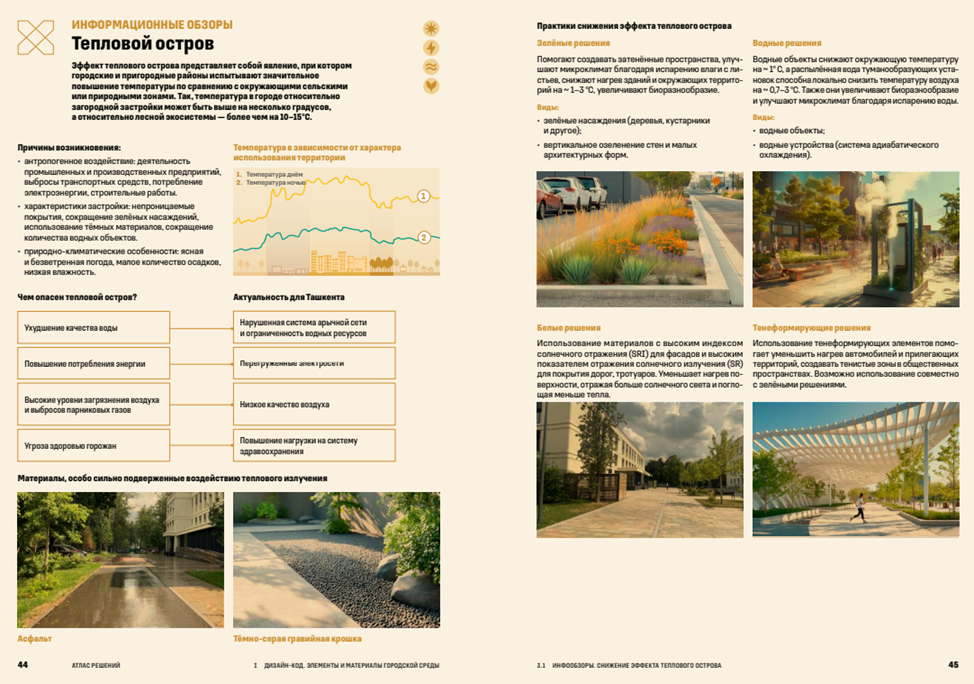
Material Selection and Assessment
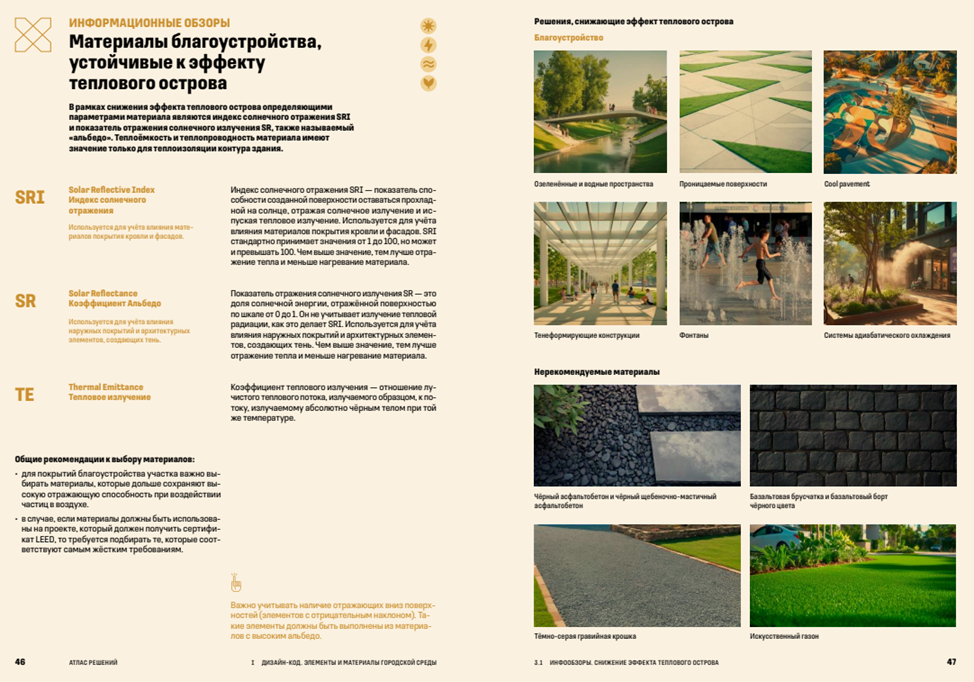
In selecting solutions to reduce the urban heat island effect, HPBS developed a material assessment framework based on Solar Reflectance Index (SRI) and Solar Reflectance (SR, albedo) values.
These indicators became the foundation for material selection:
- minimum reference SRI/SR values were established for roofs, pavements, and architectural elements (aligned with LEED v4 principles);
- recommended value ranges were defined for different surface types, including concrete, natural stone, permeable pavements, wood-plastic composites, rubber surfaces, and others.
Analysis of the Client’s Material List
Each material provided by the client was analysed in detail:
- thermal performance characteristics were assessed, including SRI/SR values and weathered performance after climatic exposure;
- advantages and limitations were identified in relation to Tashkent’s climate;
- critically unsuitable materials - those with low reflectance and high heat capacity that intensify overheating - were excluded.
Prioritisation of Surface Types
The recommendations highlighted several priority solutions:
- light-coloured concrete pavements and tiles as a primary tool for reducing surface overheating;
- locally sourced light-coloured natural stone (limestone, travertine, dolomite, light granite);
- permeable pavements (eco-pavers, paving with wide joints and light infill) as «2-in-1» solutions combining cooling and water permeability;
- green and cool roofs with high SRI values;
- shading structures - pergolas and canopies, including those integrated with solar panels - as a complementary measure to surface materials.
Heat Island Reduction Modelling: New Tashkent Block
HPBS performed a comparative analysis based on the master plan of one of the New Tashkent blocks, assessing several scenarios:
- baseline conditions dominated by dark asphalt surfaces and roofs;
- scenarios with partial replacement of surfaces with light-coloured materials;
- combined scenarios integrating high-reflectance roofs, light external surfaces, and greenery (trees and lawns).
The modelling demonstrated that:
- heat island reduction targets (analogous to LEED requirements) can be achieved without total replacement of all surfaces, through a combination of reflective roofs and greenery;
- the most effective approach is integrated: partial replacement with light or permeable surfaces, reflective or green roofs, and additional shading from trees and canopies;
- this strategy reduces thermal stress while optimising project costs.
Key Conclusion on Urban Heat Island Mitigation
A city does not need to «paint everything white».
A far more effective approach is to define reasonable target SRI/SR values, identify critical overheating zones, and selectively replace materials, complementing them with greenery and shading solutions.
This approach has been embedded in the urban design code as a system of requirements and checklists.
Biodrainage Systems and Green Infrastructure in an Arid Climate
International stormwater management practices were adapted to the climatic conditions of Central Asia and Tashkent.
HPBS considers green infrastructure - combining green spaces with engineering solutions such as permeable pavements, rain gardens, bioswales, and related systems - as a core element of a sustainable master plan, rather than residual landscaping.
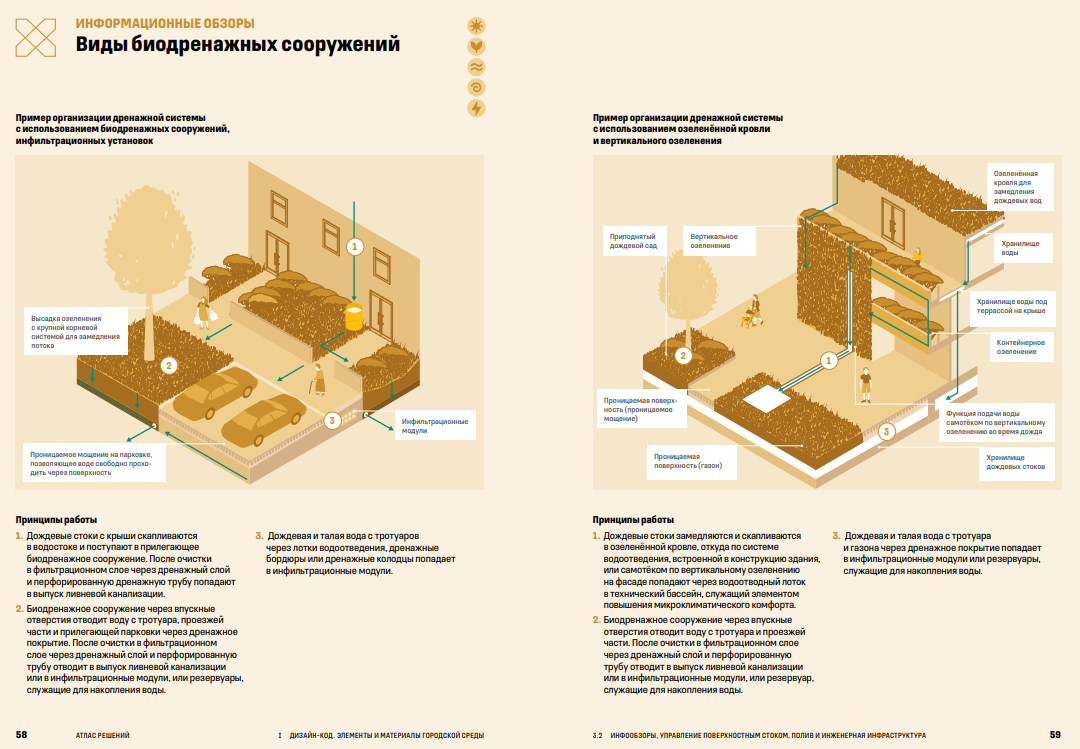
Analysis of Biodrainage Solutions
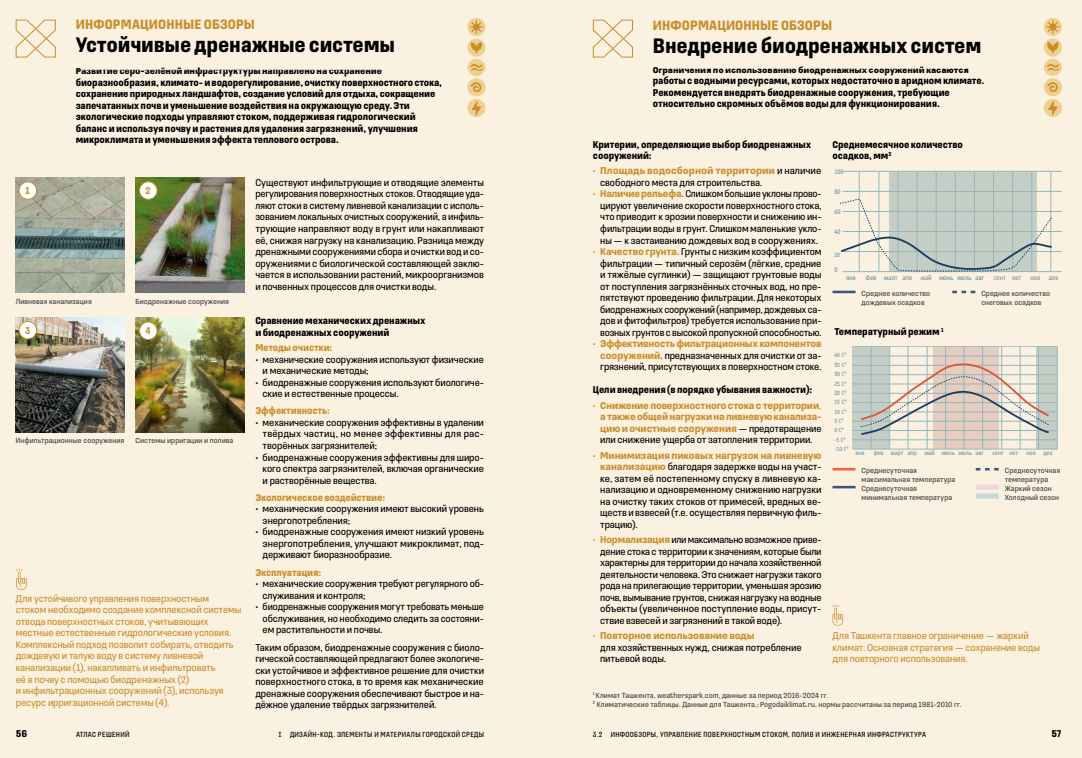
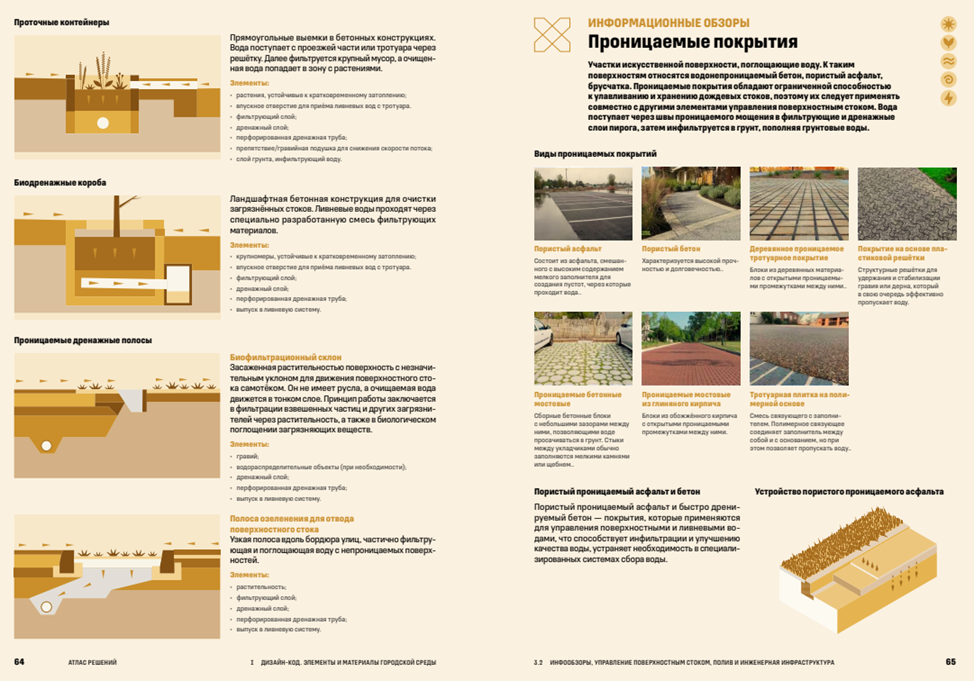
The report provides a systematic review of key biodrainage systems, including:
- bioswales and biofiltration slopes;
- rain gardens, bioplato systems, bioponds, and constructed wetlands;
- phytofilters;
- permeable pavements and underground systems for runoff retention and filtration;
- building-integrated greenery, including green roofs, as part of the overall system.
Adaptation to Tashkent’s Conditions
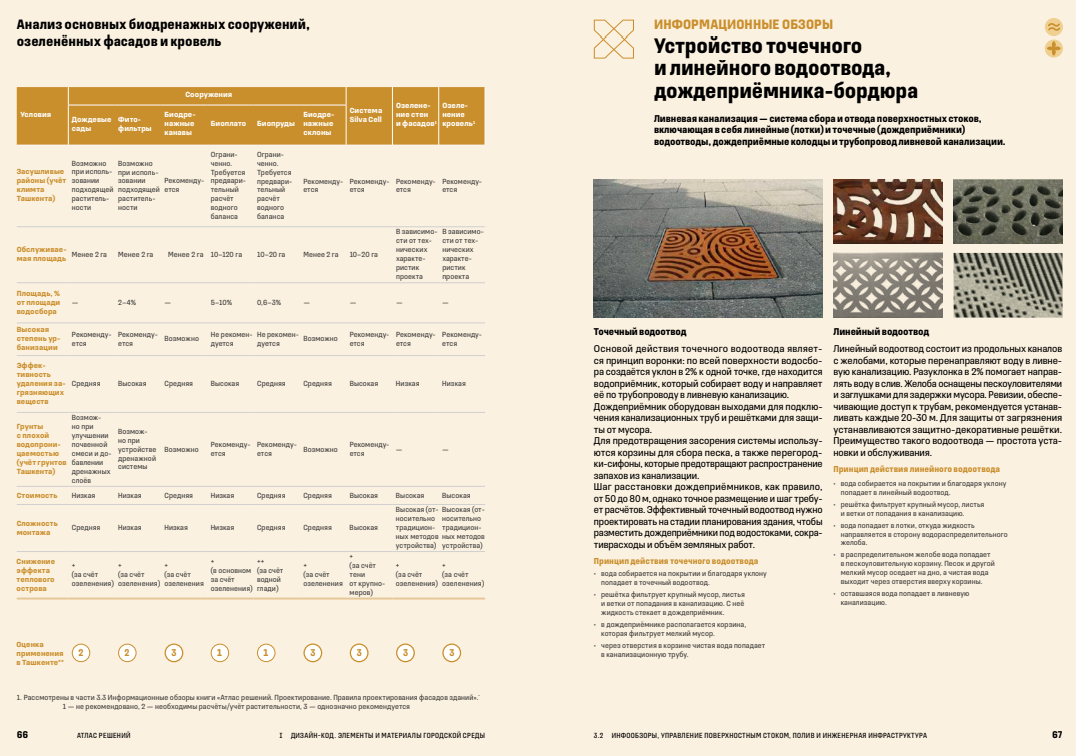
Considering the arid climate and high level of urbanisation, several key conclusions were reached:
- not all «classic» green solutions widely used in Europe and North America (such as certain types of rain gardens and wetlands) are equally effective in Tashkent;
- green roofs contribute to microclimate improvement and runoff retention, but their role as primary biodrainage systems is limited - and this is transparently acknowledged;
- the most suitable solutions for arid, highly urbanised areas like Tashkent include:
- filtration (biodrainage) slopes;
- biodrainage channels;
- permeable pavements and subsurface filtration layers;
- phytofilters with carefully selected vegetation.
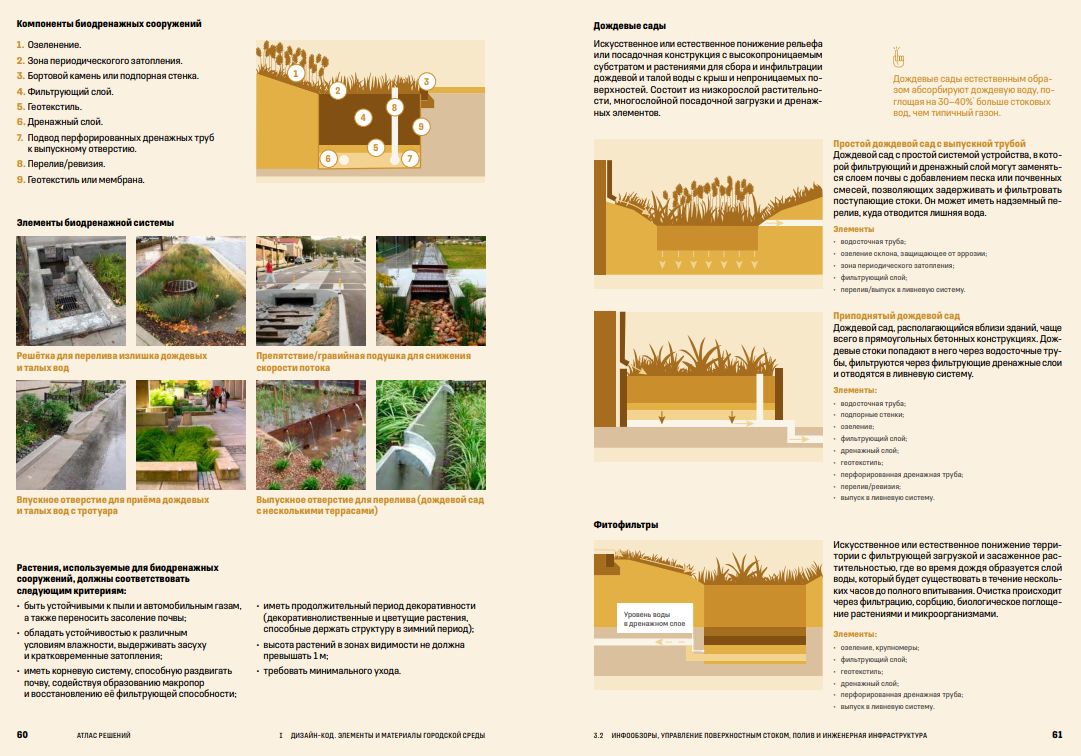
HPBS also defined criteria for selecting appropriate biodrainage systems:
- engineering and geological conditions;
- groundwater levels;
- type and concentration of pollutants;
- required treatment performance and the feasibility of infiltration or runoff detention.
Design Checklists for Practitioners
A key project outcome was the development of practical design checklists, covering:
- layout principles and integration into street and road networks;
- plant selection requirements for arid climates;
- operation and maintenance considerations;
- recommendations for coordination with surface materials and landscaping.
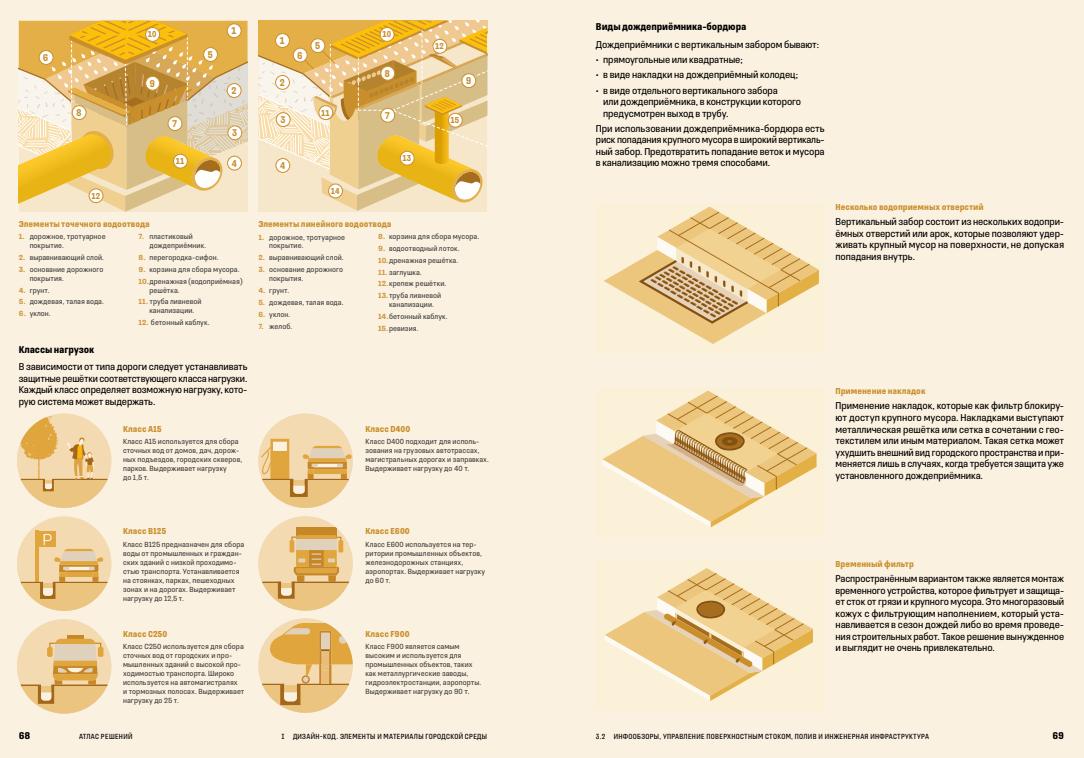
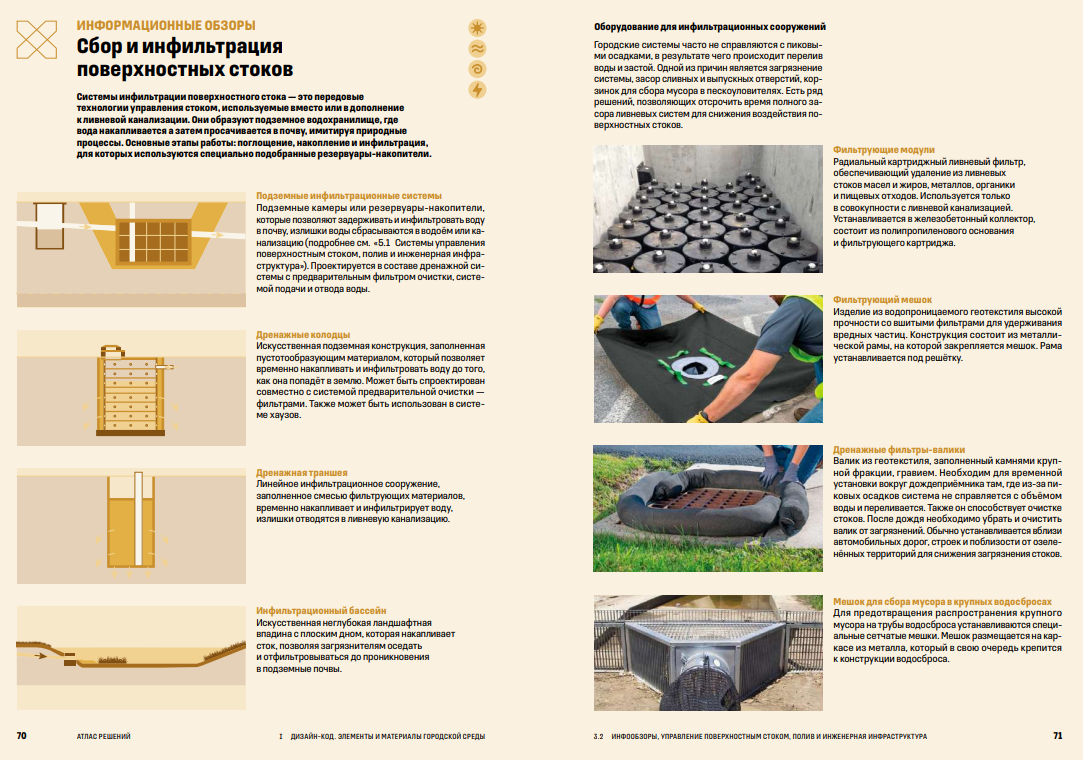
Integration into the Urban Design Code of Tashkent and «New Tashkent»
The materials and checklists developed by HPBS formed the basis of multiple sections of the urban design code - covering urban environment elements, facades and surfaces, installation rules, and operational requirements.
These materials are published on the official website of the New Tashkent Construction Directorate (newtashkent.uz).
This means that:
- every new project within Tashkent and «New Tashkent» has access to unified, climate-adapted requirements for materials and biodrainage systems;
- risks of overheating and flooding are addressed at the standard level, not only through isolated pilot projects;
- investors and developers receive clear benchmarks for urban quality and sustainability.
Value for the Client and the City
As a result of the collaboration with Atlas Bureau and the New Tashkent Directorate, three key objectives were achieved:
Systematisation of Solutions
Instead of fragmented examples and references to foreign practices, the city received a structured set of solutions adapted to local climate conditions and the regional construction materials market.
Practical Applicability
All conclusions were translated into the language of design codes, tables, and checklists, making them convenient for architects, engineers, and technical clients to apply.
Climate Resilience at the Standards Level
Urban heat island mitigation and stormwater management are embedded into mandatory design and operational requirements, rather than remaining dependent on the goodwill of individual project teams.
This also aligns with New Tashkent’s development policy, under which all projects in the area are required to obtain international green certification (LEED, BREEAM, or EDGE).
HPBS provides certification services for projects of any scale - from individual buildings to cities.
info@hpbs.uz