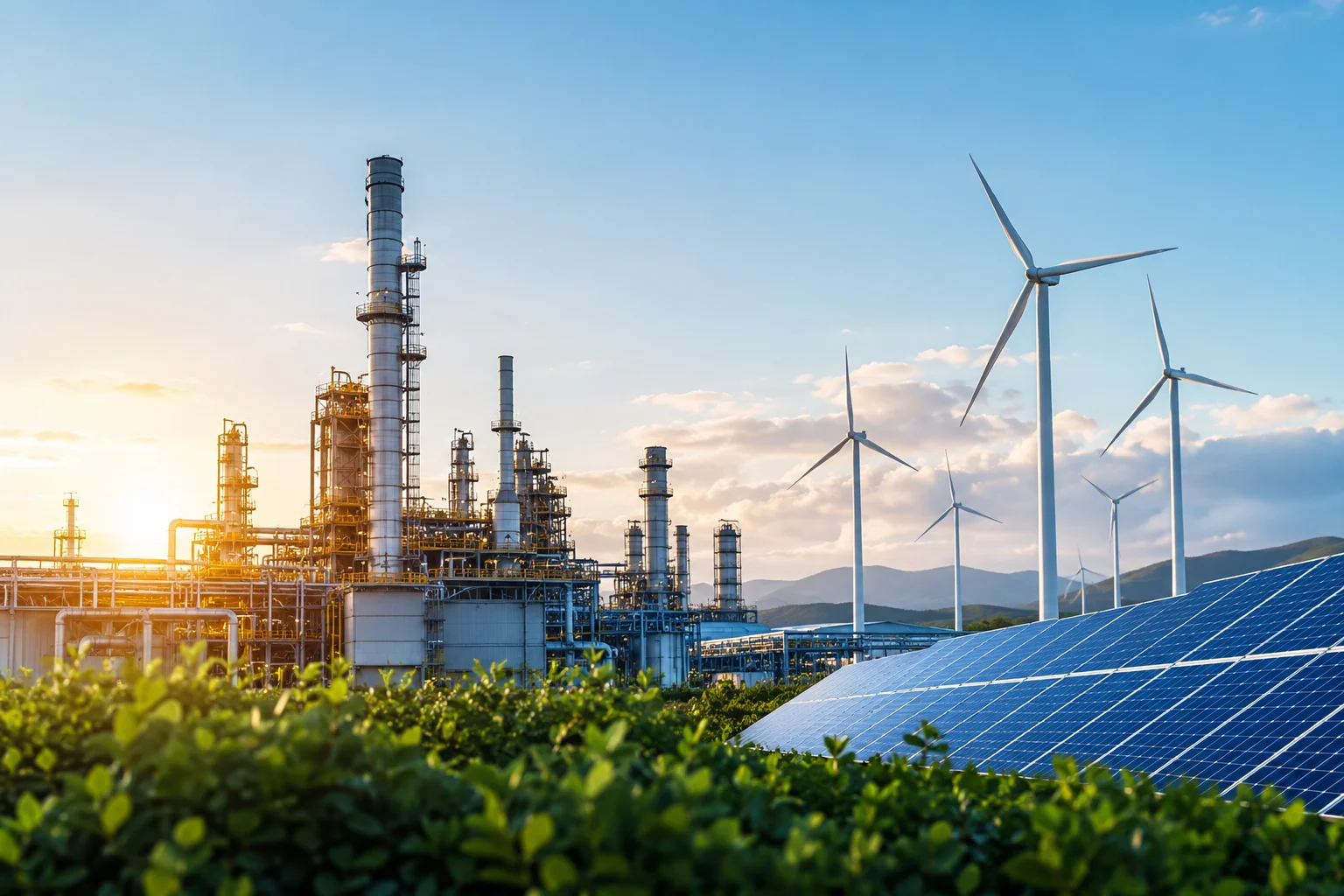
Oil and gas companies now operate in an environment where European Union climate regulation directly affects exports and investment. Strategic transition is becoming not a matter of choice, but a matter of long-term competitiveness.
The key EU policy documents shaping the development of climate requirements are:
· European Climate Law — the European Climate Law. Objective: climate neutrality by 2050 and a 55% reduction in emissions by 2030.
· The European Green Deal — the EU’s long-term strategy for transitioning to a sustainable, low-carbon economy.
How the oil and gas industry appears in EU climate documents:
· The European Climate Law and the European Green Deal establish decarbonization targets, including a gradual reduction in dependence on oil and gas in favor of clean energy.
· NECPs (National Energy and Climate Plans) often include plans to reduce oil use, transition to gas as a transitional resource, and develop CCS (Carbon Capture and Storage) and hydrogen.
· Import rules (methane) establish stringent limits on methane emissions from imported oil and gas beginning in 2030, with transparency requirements beginning in 2027.
· Industry methane reporting requires companies to monitor and reduce leaks and limit flaring and venting.
· CBAM (Carbon Border Adjustment Mechanism) is not aimed directly at oil and gas, but it creates a precedent for carbon accounting and payment when carbon-intensive products are imported.
Exports to the EU now require transparent carbon-footprint accounting and a decarbonization strategy.
Challenges for the oil and gas industry
· The industry’s high dependence on fossil fuels and carbon emissions.
· Increasing pressure from investors and banks, which increasingly require ESG reporting and climate plans.
· Risk of losing markets: companies that are unprepared to demonstrate a low-carbon pathway may be displaced.
· Technology gap: a shortage of expertise in international emissions-accounting standards and climate strategies.
Opportunities for transitioning to the requirements:
· Investment from international development banks (IFC, EBRD, ADB, World Bank) is directed toward decarbonization and modernization projects.
· Implementation of monitoring and reporting systems under the GHG Protocol, ISO 14064, and TCFD standards.
· Business diversification: developing projects in renewable energy, hydrogen, and CCUS (carbon capture, utilization, and storage).
· Increased trust and competitiveness: companies that demonstrate a low-carbon transition strategy will gain access to green finance and long-term contracts.
Strategic steps for companies
-
Analyze risks and opportunities—conduct a climate audit and assess the carbon footprint.
-
Develop a climate strategy—a decarbonization plan through 2030 and 2050 aligned with EU requirements.
-
Integrate ESG into the business model—not only reports, but actual investments in emissions reductions.
-
Partner with international institutions—attract financing and technical expertise.
-
Ensure transparency and communication—provide open reporting to clients, investors, and the government.
Examples of companies focused on accounting for climate requirements:
TotalEnergies, Shell, BP, and Equinor already publish climate strategies and invest in renewable energy and CCS projects.
Equinor is an oil and gas company actively adapting to EU requirements.
-
It has launched CO₂ capture projects (Northern Lights).
-
It is developing blue and green hydrogen production.
-
It is reducing methane leaks and implementing digital emissions monitoring.
-
It is investing in renewable energy sources (wind farms in the North Sea).
In Central Asia, the first pilot projects involving international development banks are underway (for example, modernization of oil refineries and energy systems with EBRD participation), while Uzbekneftegaz JSC is undergoing ESG transformation.
Experience of Uzbekneftegaz JSC—ESG transformation:
Environment
• Programs to reduce greenhouse gas emissions have been implemented.
• CO₂ capture and processing projects have been launched jointly with international partners.
• Measures have been adopted to improve the energy efficiency of production processes.
• The use of water and natural resources has been optimized
Social responsibility
• Educational and charitable initiatives have been implemented.
• Greater attention has been devoted to occupational health and industrial safety.
• Professional development and employee training programs have been organized.
• Regional social projects for local communities are supported.
Governance
• Annual publication of a sustainability report (since 2021)
• An ESG Implementation Department has been established to implement sustainable practices and coordinate projects.
• An annual reporting system under GRI standards has been established, ensuring transparency of operations.
• Plans have been developed to obtain ESG ratings and attract green investment.
• ESG objectives have been included in the company’s strategic business plan through 2030–2050.
Climate transformation is not a threat, but an opportunity. Oil and gas companies that can adapt will gain new markets, financing, and the status of international players. Those that wait risk being left outside the global economy. Today, strategic transition itself is becoming the principal investment project of the future.
📞 Contact us: +998 90 826-71-83
📧 Email us: info@hpbs.uz
Support for negotiations on climate requirements for suppliers to the European Union